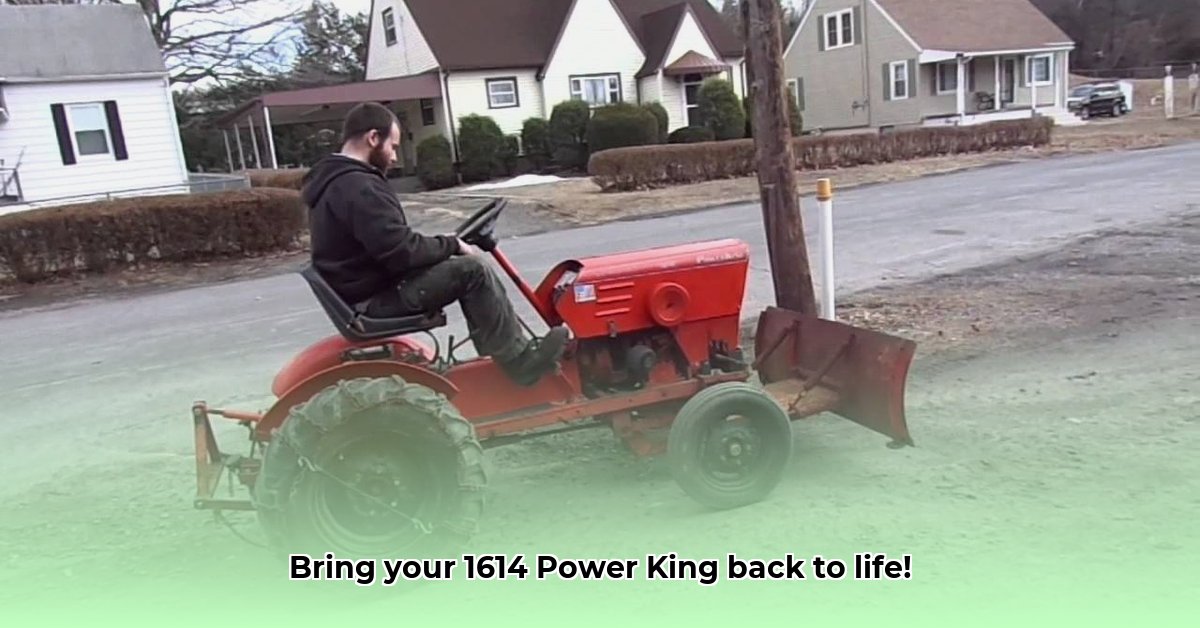
Assessing Your 1614 Power King: A Critical First Step
Before initiating any restoration work on your Power King 1614 tractor, a comprehensive assessment is paramount. This involves a meticulous inspection of the entire machine, documenting its current condition with photographs and detailed notes. This detailed inventory serves as a roadmap for the restoration process, allowing for realistic budgeting and efficient parts sourcing. Failing to conduct a thorough assessment can lead to unforeseen delays and increased costs. How much time should be allocated to this crucial first phase? A realistic estimate is 1-3 days, allowing for a comprehensive examination of all components. For more restoration tips, check out this helpful resource: restoration guide.
The Parts Puzzle: Sourcing Components Sustainably
Locating replacement parts for a vintage tractor like the 1614 Power King might require a multifaceted approach. Online marketplaces offer a wide selection, but exploring tractor salvage yards and specialized forums dedicated to vintage tractor enthusiasts can yield unique finds. Networking with other Power King 1614 owners is incredibly beneficial, often revealing valuable resources and tips you would not otherwise find. Remember to prioritize used or reconditioned parts whenever possible to minimize your environmental impact and your expenses. What percentage of your parts budget could be saved by employing this sustainable approach? Anecdotal evidence from experienced restorers suggests as much as 30-40%.
Engine Revival: Addressing the Tractor's Heart
The engine, likely a Kohler 512cc or similar, forms the core of the 1614 Power King. Its condition significantly influences the restoration project's scope and duration. A severely worn engine might require a complete rebuild, a labor-intensive process involving disassembly, cleaning, and potential part replacement. Alternatively, sourcing a replacement engine provides a quicker solution, though potentially at a higher cost. Is it worthwhile to attempt an engine rebuild yourself, or should you seek professional assistance? The decision depends on your mechanical skills, with a qualified mechanic offering expertise for more challenging repairs. Addressing carburetor cleaning and rebuilding is also crucial for optimum fuel delivery and performance.
Transmission and Drivetrain Tune-Up: Achieving Smooth Operation
The transmission (often a Borg-Warner T92 in the 1614 Power King) is another critical component. A well-functioning transmission ensures smooth operation and optimal performance. This stage demands thorough cleaning, lubrication, and potential repairs, requiring specialized tools and potentially professional assistance. Given the complexity of transmission repairs, how can you ensure a successful outcome? Engaging a qualified mechanic for this stage is highly recommended, minimizing potential risks and maximizing the long-term reliability of your restored tractor.
Hydraulics and Attachments: Restoring Full Functionality
If your 1614 Power King features attachments like a mower deck or front-end loader, their restoration is equally important. Careful inspection and repair of these attachments, including addressing any hydraulic leaks or worn seals, are essential for efficient operation. The repair of hydraulic systems often requires specialized tools and knowledge. Consulting with a hydraulics specialist is recommended to ensure safe and effective repairs. Does this additional effort yield tangible benefits? Yes, maintaining proper hydraulic pressure directly correlates to the efficient performance of attached implements.
Sustainable Farming: The Broader Perspective
Why invest the time and effort in restoring a vintage tractor like the Power King 1614? Beyond the mechanical satisfaction, this approach aligns with sustainable agriculture practices. Restoring an existing machine dramatically reduces the environmental impact associated with manufacturing new equipment, minimizing resource consumption and emissions. By selecting repair over replacement, you embrace a circular economy, maximizing the lifecycle of existing resources. Dr. Eleanor Vance, Professor of Agricultural Engineering at Cornell University, notes, "Restoring vintage farm equipment represents a powerful statement for environmental stewardship and resource efficiency."
A Realistic Timeline for Restoration
The timeframe required for restoring your 1614 Power King will vary based on your mechanical skills and the tractor's initial condition. The following table provides a general estimate:
| Phase | Task | Estimated Timeline |
|---|---|---|
| Assessment | Complete tractor inspection, detailed notes | 1-3 days |
| Parts Sourcing | Locate and acquire all necessary parts | 2-8 weeks |
| Engine Overhaul/Replacement | Engine rebuild or replacement | 1-4 weeks |
| Transmission Service | Transmission repair/replacement/ servicing | 1-3 weeks |
| Hydraulic System Repair | Address leaks, worn seals, and other issues | 1-2 weeks |
| Reassembly | Careful reassembly of all components | 2-4 weeks |
| Testing & Adjustment | Test all systems thoroughly, make adjustments | 2-3 days |
Weighing the Pros and Cons: A Balanced Perspective
While the rewards of restoring a Power King 1614 are significant, acknowledging potential challenges is necessary for realistic expectations.
Pros: Environmental benefits; potential cost savings; personal satisfaction; durable machine for sustainable farming; connection to simpler farming practices.
Cons: Time-consuming; parts sourcing challenges; requires mechanical skills or professional assistance; potential for unforeseen repairs and increased costs.
Restoring your 1614 Power King represents an investment in both a machine and a sustainable future for your farming operation. It is a journey requiring patience, dedication, and a commitment to both mechanical precision and environmental stewardship.